
Here's the part nobody in this industry wants to say out loud. Most tattoos don't fail. They turn into tattoo remorse.
Same feeling as buying a jacked-up car, you're stuck making payments on, except this one doesn't sit in your driveway. It sits on you. For life. And the only real way out is a cover up, which usually costs more, hurts more, and limits what you can even do next.
Then comes that moment. You look at it and think, what the hell was I thinking. Why did I get this. And if it's bad enough, you start questioning everything. Design, the placement, and the decision.
Maybe you didn't even check the meaning of the Kanji symbol. You wanted strength, and now you've got something on you that translates closer to “Dumb Ass”.
It happens more than people want to admit, and it doesn't happen because the idea was bad.
It happens because the wrong artist executed it. And when the smoke clears, it comes down to one thing people constantly ignore, misunderstand, or flat out don't respect, and that's “Style”.
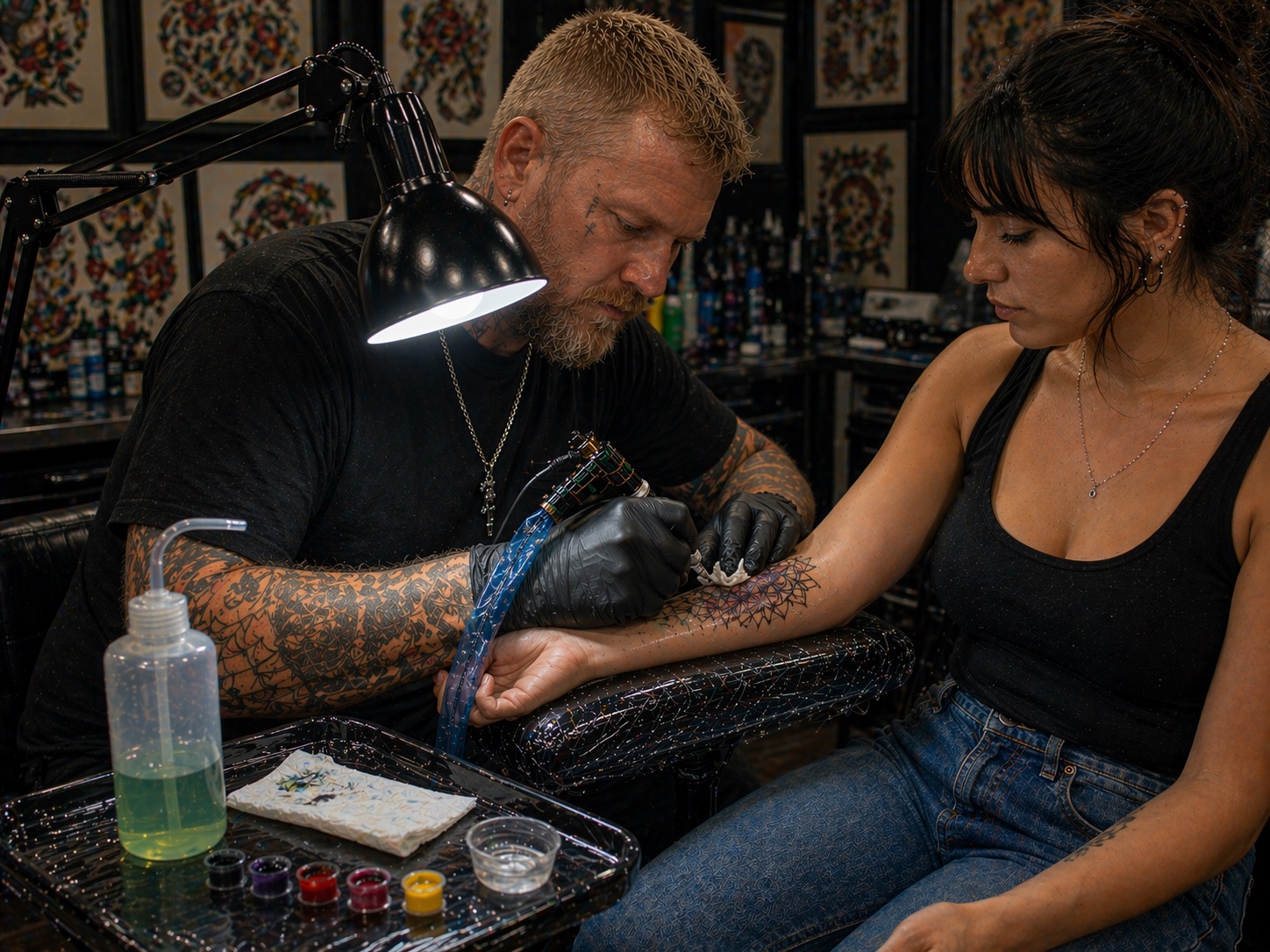
Tattooing is not one skill. It's not some general trade where a good artist can just “figure it out” across the board.
Every serious artist knows exactly what they do and, more importantly, what they don't. That's not limitation. That's discipline.
But clients don't see that. They scroll, they see one clean piece, maybe two, and suddenly that artist is “good at everything.” Realism, fine line, traditional, lettering, color. It all gets lumped together like it's interchangeable.
It's not even close. Each style has its own mechanics. Needle groupings, voltage, hand speed, depth, saturation, how the skin takes it, how it heals, how it ages. You don't fake that. You earn it through repetition, correction, and a lot of bad work that never gets posted.
You want to see the difference? Look at line work. Traditional artists build bold lines because they have to hold. That's the foundation. You mess that up; the whole piece falls apart over time. There's no hiding it.
Now look at fine line. Done right, it's controlled and intentional. Done wrong, it fades, spreads, or disappears completely. That's not a style problem. That's an artist problem.
Right now, as you're reading this, you probably just looked at one of your fine line tattoos and saw exactly what I'm talking about. I just did, lol. Same thing with realism.
Everyone loves it fresh. Looks bad ass right out of the chair. But if the artist doesn't understand contrast and structure, it turns into merged mud. No separation, no depth, just a grey blur over time.
That's not bad luck. That's lack of experience in that style. This is where professionals separate themselves. They stay in their lane.
Not because they can't do other things, but because they understand consistency is everything. You don't build a reputation on one good tattoo. You build it on hundreds that all look like they came from the same hand, same discipline, same control.
That's what people should be looking for. Consistency, not variety. Because when someone is trying to do everything, they usually haven't locked anything in, and that's where tattoo remorse starts.
You bring a fine line idea to a traditional artist. Or a realism concept to someone who lives in bold color. And instead of saying no, they say yes. Because money talks. Now you've got a mismatch, and mismatches don't always show up immediately. They show up after it heals. After the ink settles. After the lines soften and the design doesn't sit the way it was supposed to.
That's when it hits, that's when the remorse sets in. Now you're not looking for an artist.
You're looking for someone to fix it, and the artists who can fix it are the same ones who would've told you no in the first place. So, when people ask how to choose the right tattoo artist, they ask the wrong question. You don't start with the artist; you start with the style.
Once you understand that, everything tightens up. Your options shrink. The noise disappears. You stop guessing. You stop chasing random portfolios that don't match what you actually want.
You start making decisions based on alignment, that's the difference between hoping it comes out right and knowing it will. Most people never get there, they stay stuck scrolling, trying to force a fit that isn't there, that's why so many tattoos miss. Not because the idea was weak but because the match was wrong.
That's starting to change. Platforms like Inker are making it easier to cut through that noise and find artists based on real style, real work, and real availability instead of guessing your way through it. Because this isn't about finding someone who can tattoo. It's about finding someone who does exactly what you're asking for. And those are two very different things.