
Ok guys, the following article is NOT a religious argument. It's a personal observation. With that said, here we go!
At some point you must admit the Devil is marketed in some form as understanding human attention better than most Fortune 500 marketing departments.
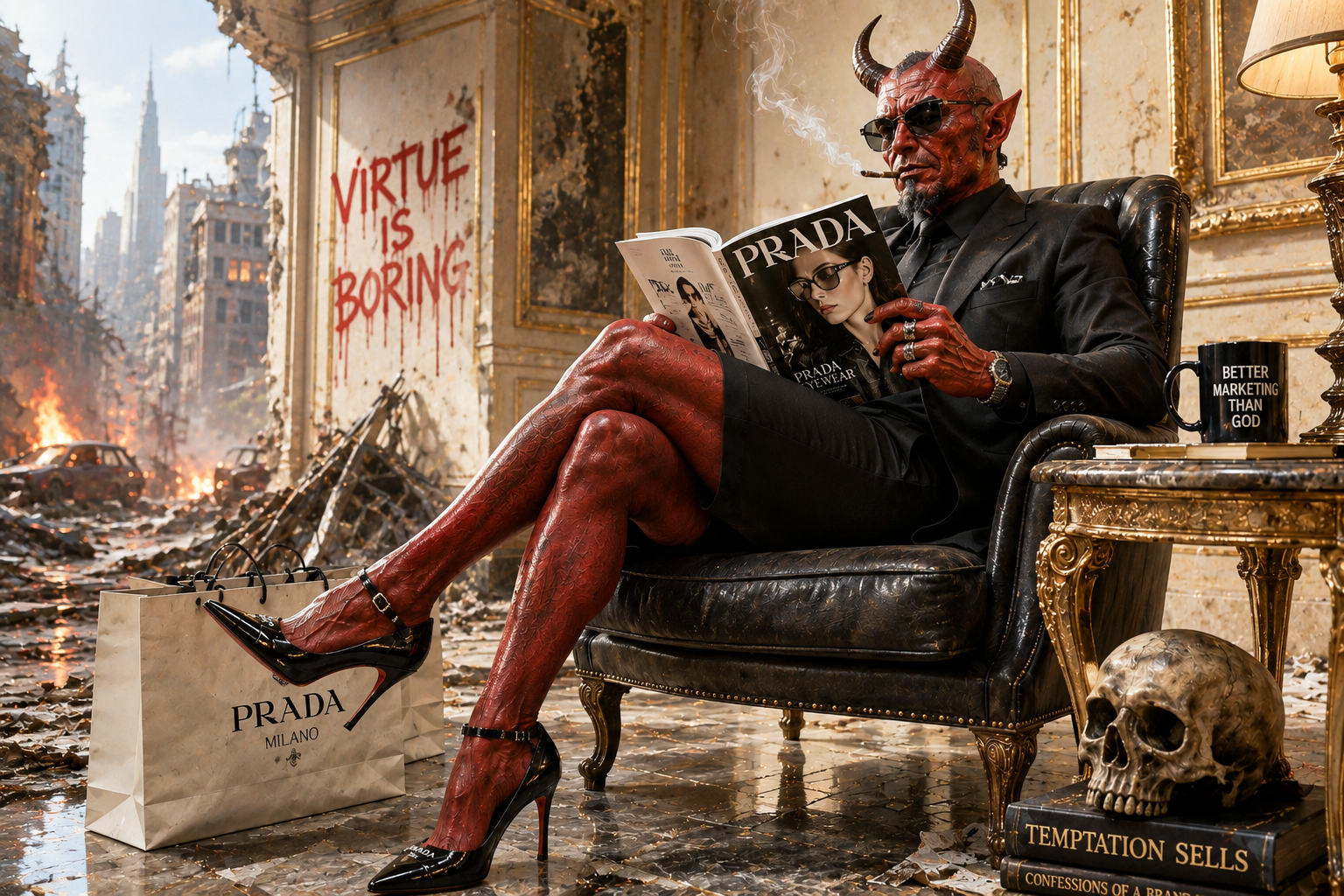
Tattoo culture did not invent this phenomenon. It simply displays it more honestly than most industries. The same society that publicly celebrates virtue-built blockbuster movies around darkness, filled bookstores with it, turned it into fashion, and made fortunes packaging it for mass consumption. Nobody called a movie or book: The Angel Wears Prada because angels rarely create tension. The Devil walks into every story carrying temptation, conflict, consequence, uncertainty, and the possibility that somebody is about to make a terrible decision. Human beings have always followed those footprints, even while convincing themselves they were headed somewhere else.
The longer you spend around tattoo culture, the harder it becomes to ignore the same pattern playing out on skin, as people are not covering themselves in demons, skulls, reapers, fallen angels, and scenes of destruction because they secretly want evil to win. That is the explanation people reach when they stop digging too early.
I am of the opinion that the reality is simpler because people recognize struggle long before they recognize perfection.
A flawless saint may represent an ideal, but a fallen angel carries a story. Long before tattoo machines existed, those symbols already possessed power because they represented temptation, consequence, mortality, and the uncomfortable realities of being human. Human beings have spent thousands of years trying to organize themselves into civilized societies while quietly carrying the same instincts, fears, desires, weaknesses, and contradictions that existed long before the first city was ever built, and that's why these symbols survive.
A skull and serpent have no explanation because the meaning arrives before the words do and somewhere deep inside the human operating system those symbols are already understood. Most of modern society communicates through explanations while tattoo culture still communicates through symbols.
The deeper you look, the stranger the pattern becomes. The same culture that claims to be uncomfortable with darkness cannot stop consuming it. Parents spend years teaching children about honesty and integrity, then spend their evenings watching documentaries about serial killers, lol. Society praises loyalty while building entire entertainment empires around betrayal, infidelity, corruption, revenge, and scandal. People publicly admire discipline while privately becoming fascinated by collapse.
Nobody gathers around the workplace break area to discuss the guy who quietly made responsible decisions for thirty years. They gather around to gossip about the train wrecks, and the affairs their peers are having. Unfortunately, human attention has ALWAYS drifted toward consequence because consequence reveals character faster than success ever does.
Tattoo culture simply displays the same pattern more openly than most environments.
A fallen angel says what most people eventually discover for themselves, which is that human beings are far more comfortable talking about redemption than they are talking about the mistakes that made redemption necessary in the first place.
That is where the imagery gets its power. Not from darkness, but from recognition. One of the stranger observations I've made over the years that's hiding inside the tattoo culture, is that very few people choose imagery representing the version of themselves they already are. Most choose imagery representing the battle they are fighting, the person they almost became, or the thing they fear becoming someday.
Think about it……...The recovering addict that gravitates toward demons, the person wrestling with his temper gravitates toward skulls and warfare, oooh, guess that describes me, lol. And the woman rebuilding herself after betrayal gravitates toward serpents, transformation, and rebirth. Then there's the person quietly terrified of mortality that gravitates toward reapers, hourglasses, graveyards, and symbols of death. The imagery often reveals the struggle more accurately than the person wearing it.
That's why tattooing feels different from fashion, as fashion projects, and tattooing confesses.
Skulls, demons, serpents, and fallen angels became popular because people were fascinated with darkness, or maybe they became popular because they expose something most people spend enormous energy trying to conceal. But let's go to the core here, human beings are not nearly as civilized as they pretend to be. Underneath careers, politics, religion, status, and social performance sits the same ancient creature wrestling with desire, fear, temptation, loyalty, betrayal, and survival.
The “governor” of civilization did not remove those instincts; it just taught people how to hide or subdue them temporarily. Tattoo culture never seemed particularly interested in hiding them, and that's why the imagery persists. Not because it is evil, but because it is honest.
Inker.com helps people locate tattoo artists, and understands that behind every tattoo sits more than artwork because symbols are stories compressed into images. The tattoo world remains one of the few places where people still communicate through symbolism instead of pretending everything important can be reduced to a slogan, a caption, or an algorithm. Spend enough time around tattoo culture and one thing becomes clear. People are not choosing pictures. They are choosing stories, and stories have been influencing human behavior long before anybody invented advertising, marketing, or social media.