
There was a time when being booked out carried weight because it meant something real was happening underneath the surface. An artist became difficult to access because demand naturally started outrunning available time. Clients kept returning, healed work kept walking around outside the shop advertising itself for free, and word of mouth spread through actual human conversations instead of algorithm tricks and manufactured perception games. Nobody needed dramatic announcements every other week because the reputation already existed in the environment itself. People felt it long before they ever opened a calendar.
Back then, artists didn't need to constantly convince everybody they mattered because the work already did the talking for them. You could feel certain artists building momentum without them posting a single “books closed” graphic or dramatic countdown timer. Their names traveled through conversations, through sleeves rolled up at bars, through people sitting at work staring at somebody else's healed tattoo asking, “Who did that?” That kind of reputation moved quietly, but once it locked in, it became almost impossible to stop.
Now the entire psychology surrounding tattoo availability has changed.
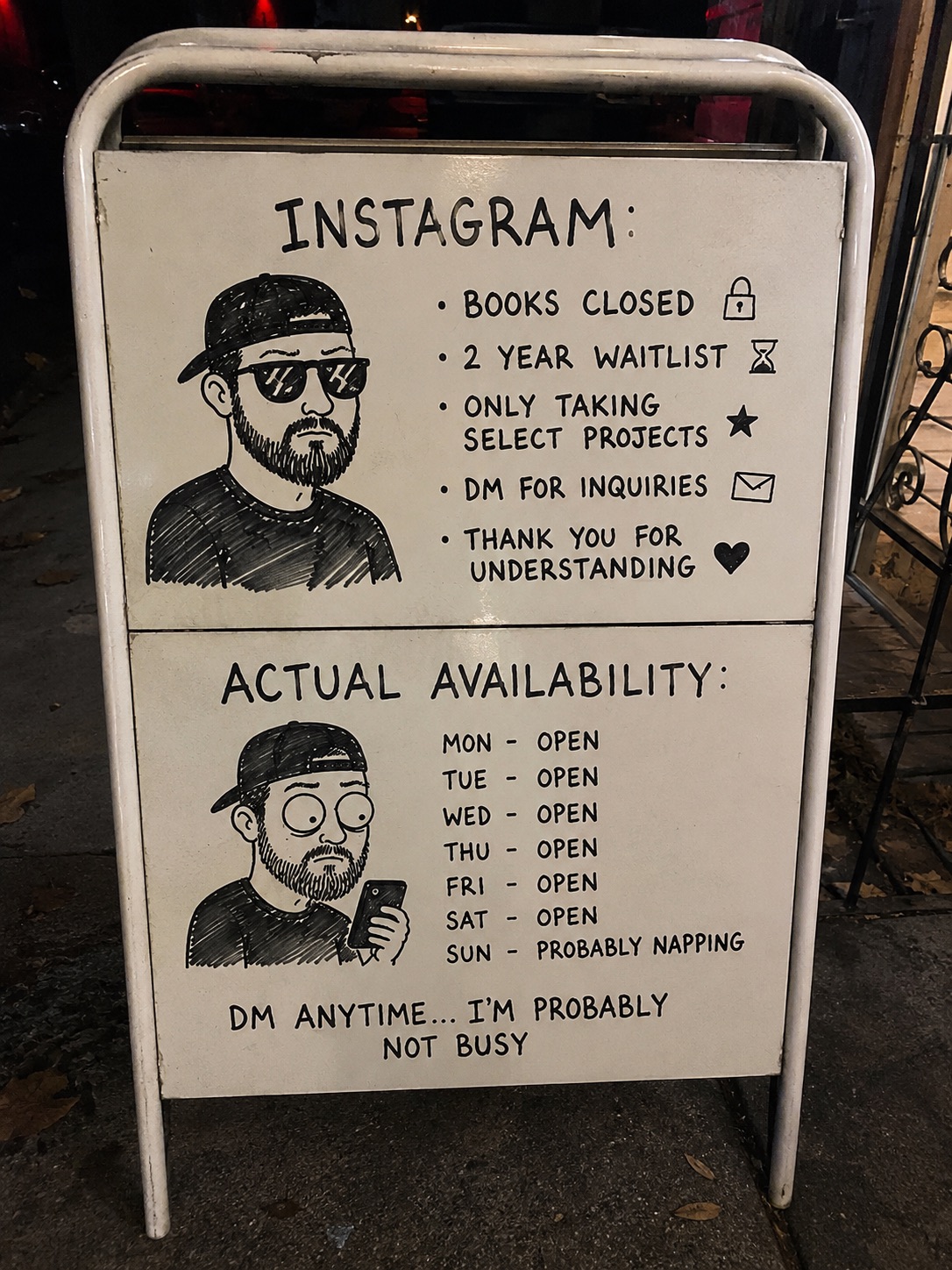
Modern tattoo culture turned unavailability into status, and once social media entered the picture, that status became marketable. Somewhere along the line, artists realized that appearing difficult to book created emotional value in people's minds whether the demand was fully real or not. Scarcity started functioning like branding. The harder somebody looked to access, the more successful they appeared, and the more successful they appeared, the more desirable they became. Once that loop locked itself into online culture, the industry started drifting into some very strange psychological territory where perception started carrying almost as much weight as reality itself.
Today artists are no longer just competing through tattoos. They are competing through optics, perception, exclusivity, visibility, and the emotional performance of success itself. The appearance of momentum became almost as important as momentum, and the appearance of demand became almost as important as demand.
Everybody suddenly became “books closed,” “limited availability,” “currently overwhelmed,” or “only accepting a few select projects.” Every opening became dramatic, and booking windows became an event.
Even posting calendar screenshots became another opportunity to project online status like the industry had turned into one giant psychological poker game where everybody was bluffing at the same table.
And the truth is, some of it is legitimate. There are artists out there who genuinely earned every bit of their demand through years of consistency, discipline, trust, healed work, professionalism, and relentless refinement of their craft. Their schedules filled naturally because people kept coming back, recommendations kept spreading, and reputation hardened over time like concrete.
Those artists usually don't even need to talk much because the work and the environment around them already speak loudly enough. You walk into certain shops and can immediately feel which artist in the room is dangerous without them saying ten words. Their presence feels earned instead of marketed.
But there's another side to this industry now that nobody really wants to say out loud publicly because too many people are participating in it at the same time.
A lot of artists are quietly performing demand because they feel psychologically forced to.
That pressure changes people in ways that outsiders don't fully understand because online culture quietly convinced artists that looking busy matters almost as much as actually being busy. No artist wants to appear slow publicly anymore because social media turned availability into weakness.
An open schedule starts feeling dangerous, and empty days start feeling humiliating. Delayed responses start becoming intentional because immediate responses begin feeling desperate. Once those emotions attach themselves to survival, artists naturally begin managing perception almost as aggressively as they manage the actual tattooing itself.
That's where the fake “booked out” epidemic starts spreading through the culture.
Not always through outright lies because most of the time the behavior is more subtle and psychologically layered than that. It shows up through strategic delays, selective posting, carefully framed availability, artificial urgency, staged scarcity, manipulated perception, and endless little performance tactics designed to reinforce the illusion of overwhelming demand.
Some artists intentionally wait days to answer messages because replying too quickly feels “too available.” Others constantly announce “very limited openings” regardless of what their schedule actually looks like because urgency itself became part of the sales psychology. Then there are artists who became so addicted to the appearance of exclusivity that they started treating accessibility like a threat to their image.
Focusing on looking booked instead of becoming unforgettable is the real pitfall because performance eventually starts replacing substance. Once somebody falls into that trap, maintaining the image becomes a full-time psychological burden. Every post becomes calculated, and cancellations start feeling threatening.
Eventually openings in the schedule start feeling like something that needs to be hidden or strategically explained before somebody notices the illusion cracking. At that point the artist is no longer simply building a career. They are protecting a character they created online.
And protecting characters eventually burns people out because online validation behaves like a drug. Once somebody becomes emotionally dependent on looking successful every second of the day, silence starts feeling dangerous. Slower weeks create anxiety, and every dip in engagement feels personal.
At that point, some of these artists are no longer even enjoying tattooing anymore because they're too busy managing optics, impressions, and “emotional theater” for strangers online who will forget about them the second the algorithm shifts.
Meanwhile, some of the deadliest artists in the industry move completely differently because they are too busy building real gravity underneath the surface to obsess over performing importance online all day. While one artist is staging luxury lifestyle content trying to engineer perceived demand, another artist is quietly refining healed work, improving client experience, strengthening consistency, and building actual trust one tattoo at a time. One artist is trying to look expensive while another artist is quietly becoming valuable.
That kind of reputation compounds differently. It moves slower at first, but once it locks in, it becomes brutally difficult to compete against because it's rooted in reality instead of “emotional theater.” Clients return constantly, and recommendations spread naturally.
The irony is that some artists chasing status the hardest online are actually becoming emotionally trapped by the image they created for themselves. Once your identity becomes tied to looking constantly booked and constantly winning, everything becomes branding, strategy, and another attempt to maintain momentum because modern tattoo culture convinced people that looking successful matters more than building something durable.
Younger artists entering the industry are watching all of this happen in real time while assuming this is simply how tattoo success works now. They see the fake urgency, manufactured scarcity, curated exclusivity, and staged lifestyle content, and begin copying those behaviors before they've even built the foundation necessary to sustain a real long-term career.
Real reputation still spreads the old way whether people want to admit it or not. It spreads through healed work, consistency, professionalism, atmosphere, trust, and clients naturally recommending somebody because the experience stayed with them long after the tattoo healed.
That's exactly why Inker.com matters right now because the tattoo industry is starving for something real underneath all the performance, manufactured exclusivity, and “social media theater.” Artists should not feel psychologically forced to manipulate availability, engineer fake scarcity, or constantly perform status online just to appear valuable in front of an algorithm. Inker.com changes that equation because it creates an environment where artists can build visibility around what matters long term, the work, the experience, the personality, the professionalism, the atmosphere, and the identity behind the craft itself. Instead of rewarding whoever plays the loudest psychological games online, Inker.com gives artists an opportunity to be discovered through substance, consistency, and authentic connection to tattoo culture.
That distinction matters because eventually every illusion collides with reality. The hype fades. The algorithms shift. The fake urgency burns itself out. But the artists who built real trust, real relationships, and real reputations underneath the surface are the ones still standing when the noise dies down.
Those are the artists Inker.com is built for.