
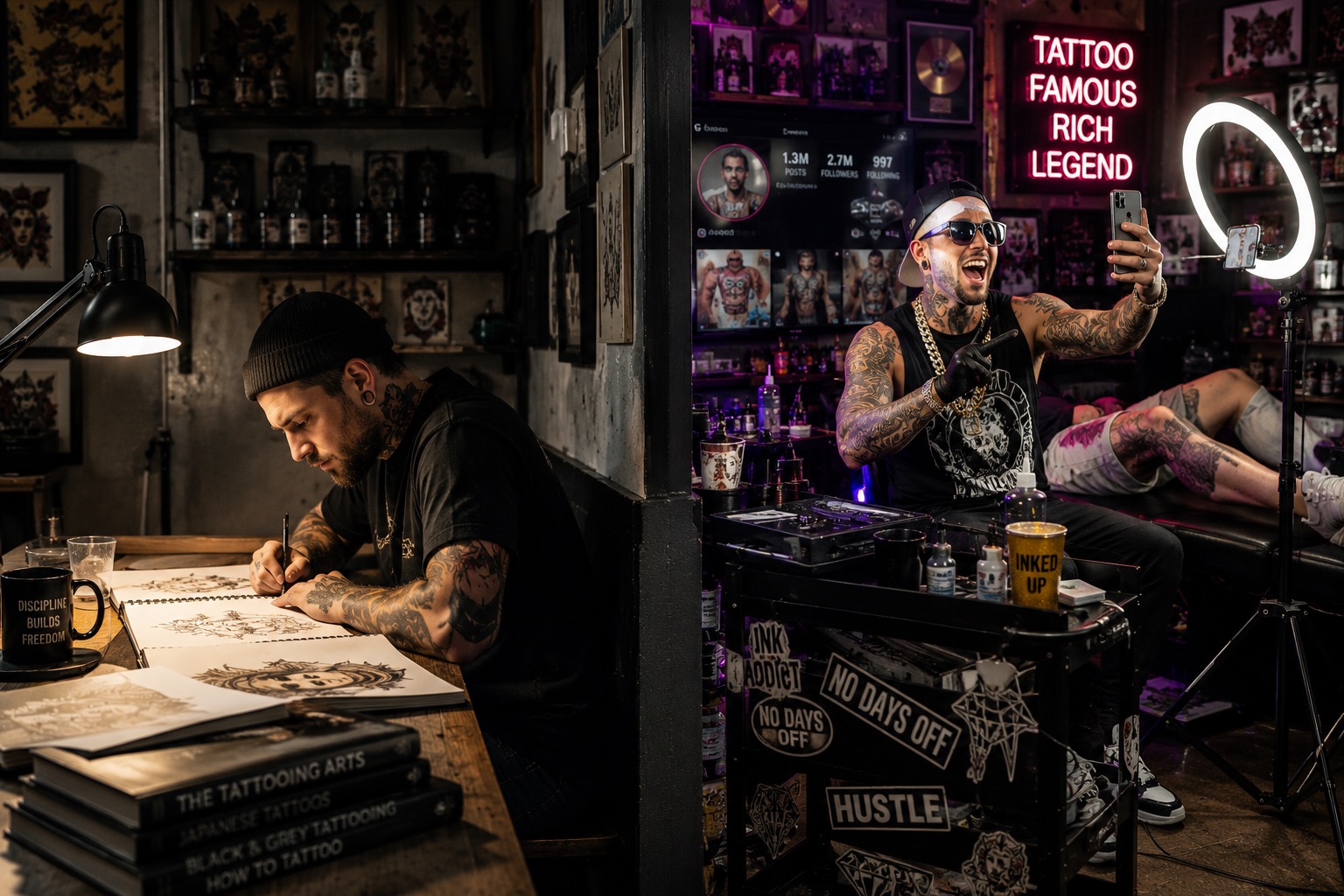
The tattoo industry has always had two completely different worlds operating inside it at the same time, and the longer you stay around tattooing, the easier it becomes to recognize the difference between them. One world is loud, constantly performing, constantly trying to command attention through visibility, presentation, and image. It's the side of the industry everybody notices first because it aggressively pushes itself into people's faces every single day. Expensive looking reels, perfectly staged studios, rented luxury cars, dramatic cinematic edits, fake “booked out” screenshots, nonstop self-promotion, and artists trying to convince the world they already became something bigger than they actually are. That side of tattooing has grown massively over the last decade because social media rewards appearance first and asks questions later.
The other world moves much quieter, and ironically, that's usually where the real killers are hiding. There are certainly artists who deserve every bit of attention they get, but often enough that the pattern becomes impossible to ignore once you've watched enough careers rise and collapse inside this business. One artist spends most of their energy building an image while another artist spends that same energy building an actual reputation, and those two things are nowhere near as connected as people want to believe they are. The dangerous artist in this industry is very often not the loudest one online or the person flooding social media trying to dominate everybody's attention. The dangerous artist is usually the one quietly sharpening their craft year after year while nobody fully realizes yet what they're becoming underneath the surface.
That artist becomes terrifying later because they are building something real while everyone else is busy performing success in front of strangers.
One of the strangest things tattooing ever went through was the explosion of “tattoo television” because it completely changed how people psychologically viewed the industry. Suddenly artists became celebrities almost overnight. Shops became tourist attractions. Cameras followed artists around like musicians on reality shows and every argument, rivalry, or dramatic interaction became content because entertainment culture understands one thing better than almost anything else, which is how to manufacture attention and emotional investment.
For a while it genuinely looked like tattooing had crossed over into something entirely different. People who had never stepped foot inside a tattoo shop suddenly knew artist personalities, catchphrases, fabricated rivalries, and heavily edited versions of what tattoo culture supposedly looked like. Certain artists became larger than life figures almost overnight and it created this illusion that visibility itself had become the new currency of tattooing.
But eventually the cameras stopped rolling. The shows faded away, trends shifted, audiences moved on, and the spotlight found something else to feed on because attention never stays in one place forever. Once that happened, reality quietly walked back into the room and started separating the artists who had actual foundations underneath the exposure from the artists who had become entirely dependent on attention itself.
Some artists stayed dangerous after the spotlight faded because the cameras were never the thing holding their careers together in the first place. They already had real clientele, real craftsmanship, real consistency, and real relationships long before television ever found them. The exposure accelerated visibility, but the substance underneath it was already there. Other artists faded almost immediately once the entertainment machine moved on because attention had quietly become the entire structure supporting everything around them.
That exact cycle is repeating itself right now except this time the machine is social media instead of television.
Every artist today is under enormous pressure to look successful before they actually become successful, and that pressure slowly changes people psychologically whether they realize it or not. The algorithm rewards appearance, lifestyle, and perception so aggressively that artists naturally start adapting themselves toward whatever creates the strongest reaction online. Eventually some artists stop building careers and start building performances of careers because performance generates faster attention than patience does. That's why so much of modern tattoo culture feels emotionally exhausted underneath the surface.
Everybody is selling, marketing and building a personal brand, and trying to appear fully booked, constantly traveling, constantly leveling up, constantly winning. The pressure to look important online has become so overwhelming that many artists now spend almost as much time maintaining the appearance of success as they do actually improving the work itself.
Meanwhile some of the deadliest artists in the industry barely look famous at all. Those are the tattoo artists nobody sees coming because they move completely differently from the attention driven side of the business. They are not obsessed with dominating social media every five minutes or manufacturing the illusion of importance for strangers online. They are focused on the work itself, the client experience, the consistency, and the slow process of becoming undeniable through repetition instead of spectacle.
While one artist is refining hashtags and trying to engineer engagement, another artist is quietly refining line work, improving composition, strengthening healed results, and building trust one client at a time. While one artist is exhausting themselves trying to constantly prove relevance online, another artist is building loyalty quietly underneath the surface through real conversations, real professionalism, and tattoos that continue speaking for themselves years later.
That's how actual reputation still spreads inside tattooing despite everything social media tries to convince people otherwise. Real reputation spreads through healed work, through clients returning over and over again, through conversations happening when the artist is not even in the room, and through people naturally recommending somebody because the experience and work genuinely stayed with them. That kind of reputation compounds slowly, but once it hardens, it becomes incredibly difficult to compete against because it's rooted in trust instead of visibility alone.
The irony is that many artists chasing attention the hardest are unknowingly trapping themselves inside a cycle where they can never slow down without feeling like they are disappearing. Once your identity becomes completely dependent on constant visibility, every post starts feeling like survival. Every reel becomes another attempt to maintain relevance. Every quiet moment starts creating anxiety because silence feels dangerous when your entire career structure is tied psychologically to remaining visible at all times.
The quieter artist avoids that trap because they are building gravity instead of chasing attention. And gravity works differently because at first almost nobody notices it happening. Then suddenly the artist who seemed invisible two years earlier becomes impossible to book because trust quietly compounded underneath the surface while louder personalities burned themselves out trying to maintain constant exposure. Those artists become respected long term not because they mastered internet theatrics better than everybody else, but because they became undeniable where it actually mattered most.
That distinction matters more now than ever because social media created the illusion that tattooing is primarily about exposure when in reality tattooing has always been about trust. Exposure might get somebody through the door once, but trust is what fills books consistently year after year without needing to constantly manufacture attention every waking hour.
That's part of why platforms like Inker.com matter right now because the tattoo industry does not need another empty system rewarding whoever performs hardest online. What tattooing actually needs are environments where artists with real substance, consistency, individuality, and staying power can rise based on the quality and identity behind the work itself instead of being reduced to another disposable thumbnail floating endlessly through algorithm culture.
Inker.com creates space for artists to be discovered through their style, personality, professionalism, and artistic identity instead of forcing everybody into the same attention driven performance cycle. That distinction becomes increasingly important as more artists slowly realize that internet attention and long-term reputation are not remotely the same thing even though modern culture keeps trying to merge them together.
Because eventually every spotlight shifts somewhere else, every trend fades, every algorithm changes, and every manufactured wave eventually crashes back down into reality. When that happens, the artists still standing are usually the same ones who spent the entire time quietly sharpening their craft while everybody else was busy trying to look famous.