
Why Do Most Tattoo Shops Feel the Same Today?
When Every Shop Starts Looking Like a Template
There was a time when tattoo shops had identities so strong you could feel them before you even sat down in the chair. Every city carried a different energy, and every shop reflected the personalities of the people inside it. Some places felt shady and unpredictable, some felt artistic and chaotic, and some felt like second homes for people who never really fit anywhere else. You remembered certain shops because they had soul.
You remembered the strange artwork and flash on the walls, the old couch nobody wanted to throw out, the smell of disinfectants, the artist who disappeared every hour for a cigarette, and the stories floating around the shop while somebody was getting tattooed. The place felt alive because it was built around real personalities instead of carefully managed presentation. Every shop had its own rhythm, its own local legends, and its own atmosphere that couldn't be duplicated somewhere else.
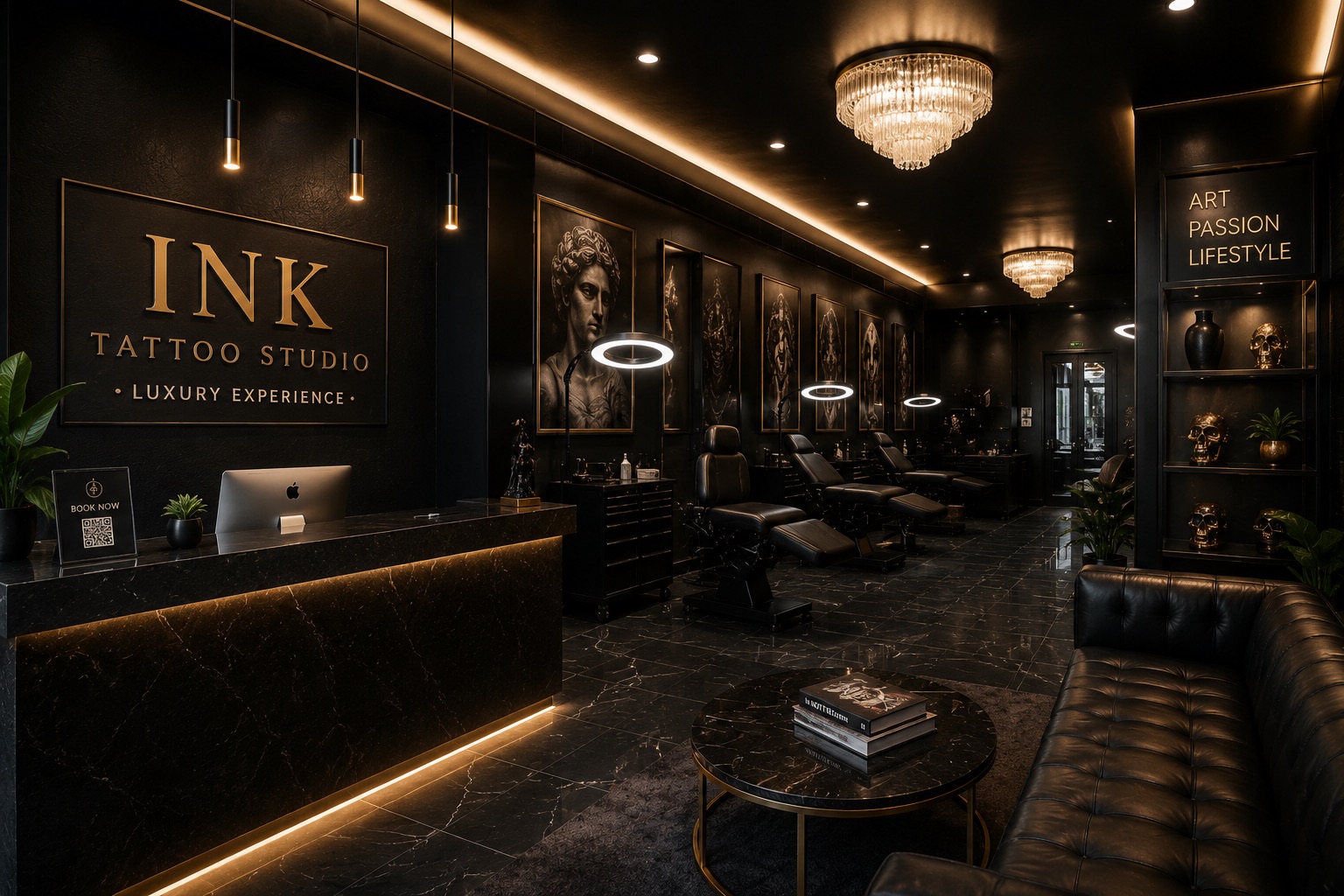
Now walk into enough modern shops and after a while a strange pattern starts revealing itself. Everything starts looking like it came out of the same blueprint. Same black walls, neon signs glowing in the corner, polished industrial lighting hanging over stations that feel more designed for social media than for actual atmosphere.
Every shop suddenly has the same carefully staged photo area, the same reel friendly angles, and the same “luxury private studio experience” language repeated so many times it starts sounding less like identity and more like copy and paste marketing.
The deeper you get into it, the more obvious it becomes that a lot of these places are no longer building environments around personality or culture. They're building visual products engineered to perform online. Somewhere along the line, shops stopped asking themselves what made them memorable and started asking themselves what would look safest inside an Instagram feed. The result is that entire cities are starting to feel visually interchangeable, like everybody got handed the same branding package and told this was what success was supposed to look like now.
That shift didn't happen because tattoo artists suddenly became fake. It happened because the industry got pulled into “algorithm culture” and started adapting to what the internet rewards. Shops realized they were no longer competing with the place down the street. They were competing visually with every artist and every studio constantly showing up on someone's phone screen every single day. The pressure to appear polished, modern, clean, and instantly marketable started influencing everything from shop layouts to how artists present themselves online.
Over time, individuality slowly became a risk while sameness became safer. That's the part nobody really talks about. The industry is technically stronger than it has ever been. There are artists producing incredible work right now and the overall quality level keeps climbing. Machines evolved, along with techniques, and artists became more efficient and versatile. But while the technical side advanced, something else started flattening out in the process. And that's Personality.
A lot of shops lost the rough edges that made them memorable. They stopped feeling lived in and started feeling curated. You walk into some places now and everything feels so carefully optimized for presentation that you almost forget tattooing is happening there. The lighting is perfect. The angles are perfect. The walls are perfect. But emotionally, the place feels empty.
That's because people can sense when an environment was designed to be experienced versus when it was designed to be photographed. Clients might not say it out loud, but they feel it.
Tattooing has never been just about the tattoo itself. People remember experiences, and they remember how a shop made them feel when they walked through the door. They remember the energy around the station, the conversations, the atmosphere, and whether the place felt authentic or manufactured.
That emotional layer matters more than people realize because tattoos are personal by nature. When somebody trusts you with something permanent, they are also absorbing the environment around the experience. The atmosphere becomes attached to the memory whether people consciously recognize it or not. A lot of modern shops forgot that.
Everything now is geared toward visibility, but visibility without identity eventually starts feeling hollow. Shops chase the same aesthetic because they believe that's what professionalism looks like online. Artists copy what performs because they're trying to survive inside an algorithm that rewards familiarity and repetition. Somebody finds a format that works, then everybody copies it until the entire industry starts visually collapsing into itself.
Same reels, captions, dramatic lighting, and “private luxury experience” messaging, that's repeated until every shop starts sounding and looking like a slightly altered version of the last one. And ironically, the more everyone tries to stand out using the same formula, the more invisible they become.
The shops that still hit differently usually have one thing in common. They still feel human. They're not perfect or sanitized, just human. You can feel the personalities inside the place. You can feel that the environment reflects the artists working there instead of reflecting whatever trend happened to dominate social media that month. Those are the shops people remember afterward because they leave an impression deeper than aesthetics.
That's part of why platforms like Inker.com matter right now. This industry does not need another lifeless directory full of thumbnails floating around the internet. What tattoo culture actually needs is a system that allows individuality to breathe again. Artists need a place where their identity, style, personality, and presence matter more than chasing whatever social media format currently manipulates attention best.
Inker.com creates space for artists and shops to stand apart based on who they actually are. Instead of forcing everyone into the same algorithm driven presentation, it allows artists to build visibility around their work, their style, and the culture surrounding what they do. That distinction matters because the future belongs to artists and shops that still feel real in an environment becoming increasingly artificial.
The strongest shops were never built around decoration. They were built around energy, personality, stories, and people wanting to be there. Clients can still feel the difference between a place built from culture and a place built from trend forecasting.
Modernizing, clean studios, and professional presentation is not the problem. The problem starts when every shop begins looking emotionally interchangeable. Tattoo shops were never supposed to feel like templates. The best ones always felt like places you remembered long after you walked out of them, and whether people realize it or not, that feeling is exactly what they are still searching for now.