
There was a time when a shop had a pulse you could feel without thinking about it. The door opened, people came in, conversations started, and work followed. Some days were stronger than others, but there was always movement. That movement carried the shop. It filled gaps, created energy, and gave everyone inside a sense that something was happening.
That feeling is getting harder to find. Not all at once, not in some dramatic collapse, but in a slow, almost quiet way. Fewer spontaneous conversations. Longer stretches between someone stepping through the door. Moments where the room feels still, where machines aren't running, where the energy dips and no one says anything, but everyone notices.
That silence has weight. It starts to sit in the back of your mind. It changes how time feels during the day. An hour without movement feels longer than it should. Stack enough of those hours together and it starts affecting decisions. Pricing, conversations, and confidence changes. The pressure builds, not just financially, but mentally.
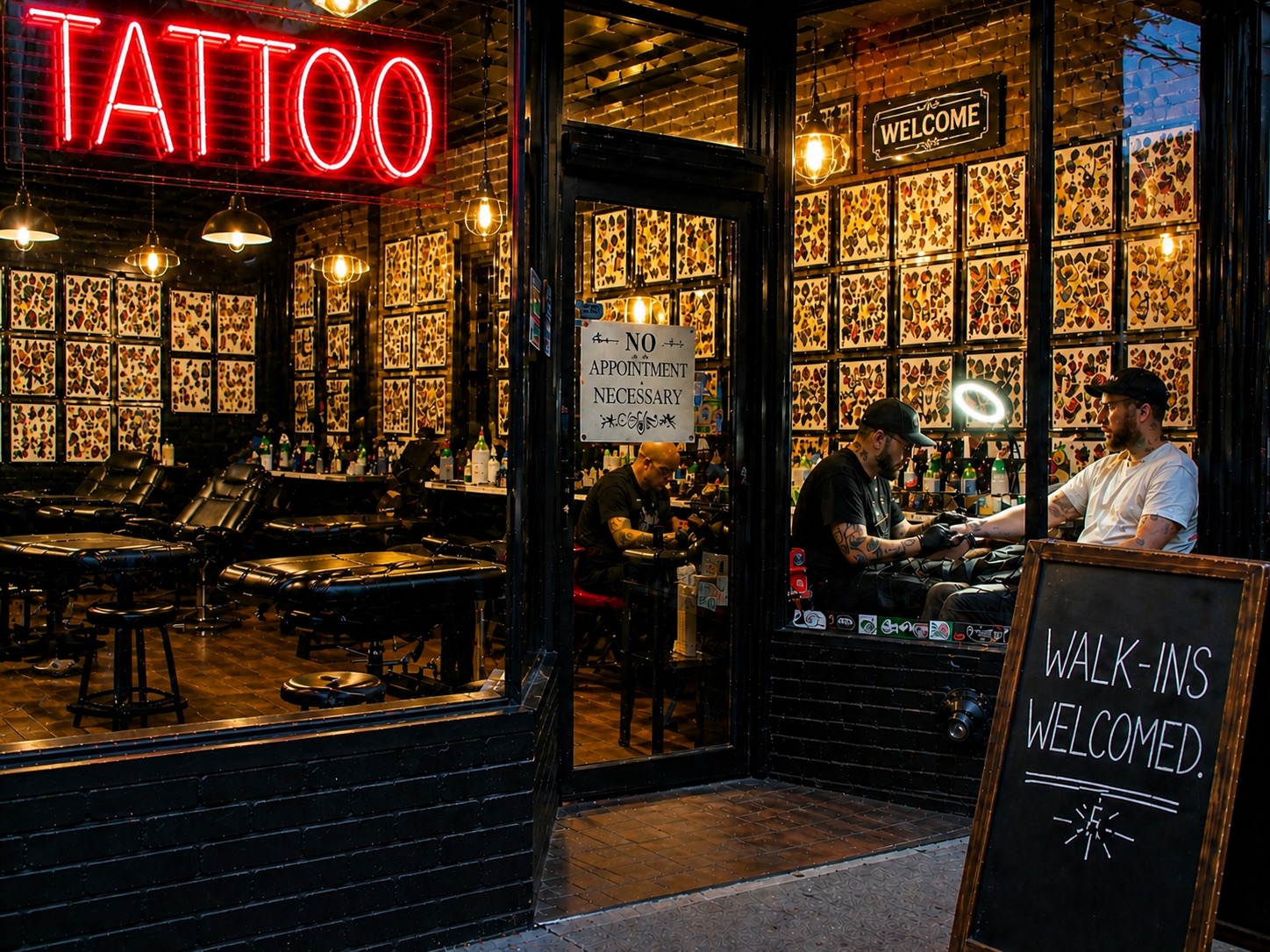
Walk-ins used to absorb that pressure. They gave you something to work with. A conversation led to a small piece, or a lead for later. Enough to keep things moving, now that cushion isn't there the same way.
The demand for tattoos hasn't gone anywhere, what changed is how people move toward getting one. Discovery used to be physical. Someone had the idea and acted on it. They walked into a shop already leaning toward a decision. That presence created opportunity.
Now the process stretches out. People spend time watching before they act. They scroll through completed work, compare styles, follow artists, save references, and sit with the idea longer than they used to. The decision happens slowly and often privately. From their perspective, it feels like they're being careful.
From the shop's perspective, it creates distance. Interest builds, but it doesn't convert right away. Attention exists, but action gets delayed. That gap becomes the problem.
Social media was supposed to close that gap, and for a while, it felt like it might. Artists could show their work, build an audience, and stay visible. Engagement created the impression that momentum was building, but over time, the limits became clear. Visibility does not guarantee commitment.
A post can perform well and still lead to nothing. Engagement can be strong while chairs sit empty. The disconnect becomes harder to ignore the longer it goes on. Most of that interaction is passive. People watch, react, and move on. Appreciation does not automatically turn into action. That's where frustration sets in, the more effort goes in triggering more content and adjustments to the new content.
But, still, the results don't always match the energy. It starts to feel like pushing without traction.
Walk-ins brought in people who were already close to deciding, social media brings in people who are still thinking about it. That difference is everything, as a business needs people who are ready to move forward. Without that, everything becomes reactive. Pricing shifts. Standards get tested. Decisions start coming from pressure instead of control. That's where shops lose stability.
So the real question isn't whether walk-ins are fading, it's what replaces them in a way that actually works. Not more content, guessing, or more waiting. What replaces walk-ins is intentional discovery. A system where someone who already knows they want a tattoo can find the right artist without friction. A system that closes the gap between interest and action and brings people in with purpose. That is the missing layer.
This is where Inker.com changes the dynamic. Not as something separate from the culture, but as something built inside it.
Instead of relying on chance, it creates structure. Instead of hoping to be seen, it allows artists to be found by people who are already looking. That alone improves the quality of every interaction. But it goes further than that.
Signing up to Inker.com is not just creating a profile, it's stepping into something that connects artists, shops, and clients in a way that feels active. When artists are featured, when their work is presented with context, when their story is told, they are no longer just another name in a feed. They become part of a larger movement that is focused on visibility, credibility, and real connection.
There is a difference between being online and being part of something. That difference is felt when artists engage with Inker.com, they are not just uploading work.
They are participating in a system that is designed to move people from interest to action. They are being placed in front of an audience that is not just watching but looking. They are part of a network that builds momentum through exposure, not just content. That creates a different kind of confidence. Not forced, not artificial, but built from being seen in the right context. And that confidence carries into everything else.
For shop owners, this shift brings something that has been missing, and that's Consistency. I'm not describing perfect consistency, but enough to smooth out the swings, reduce the pressure during slow periods, and enough to give the business something to build on instead of constantly reacting.
That changes how decisions are made. It brings control back into an environment that has felt unpredictable.
Walk-ins didn't disappear overnight; they faded as behavior changed. The shops that recognize that shift and move with it will stay ahead. The ones that keep waiting for things to feel like they used to will keep feeling that silence more often than they want to.
In this environment, skill, and visibility alone isn't enough, but being part of something that puts you in front of the right people, at the right moment, with real intent behind it, that's what matters now. And right now, Inker.com is building that path, and building something larger around it.